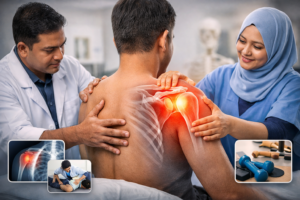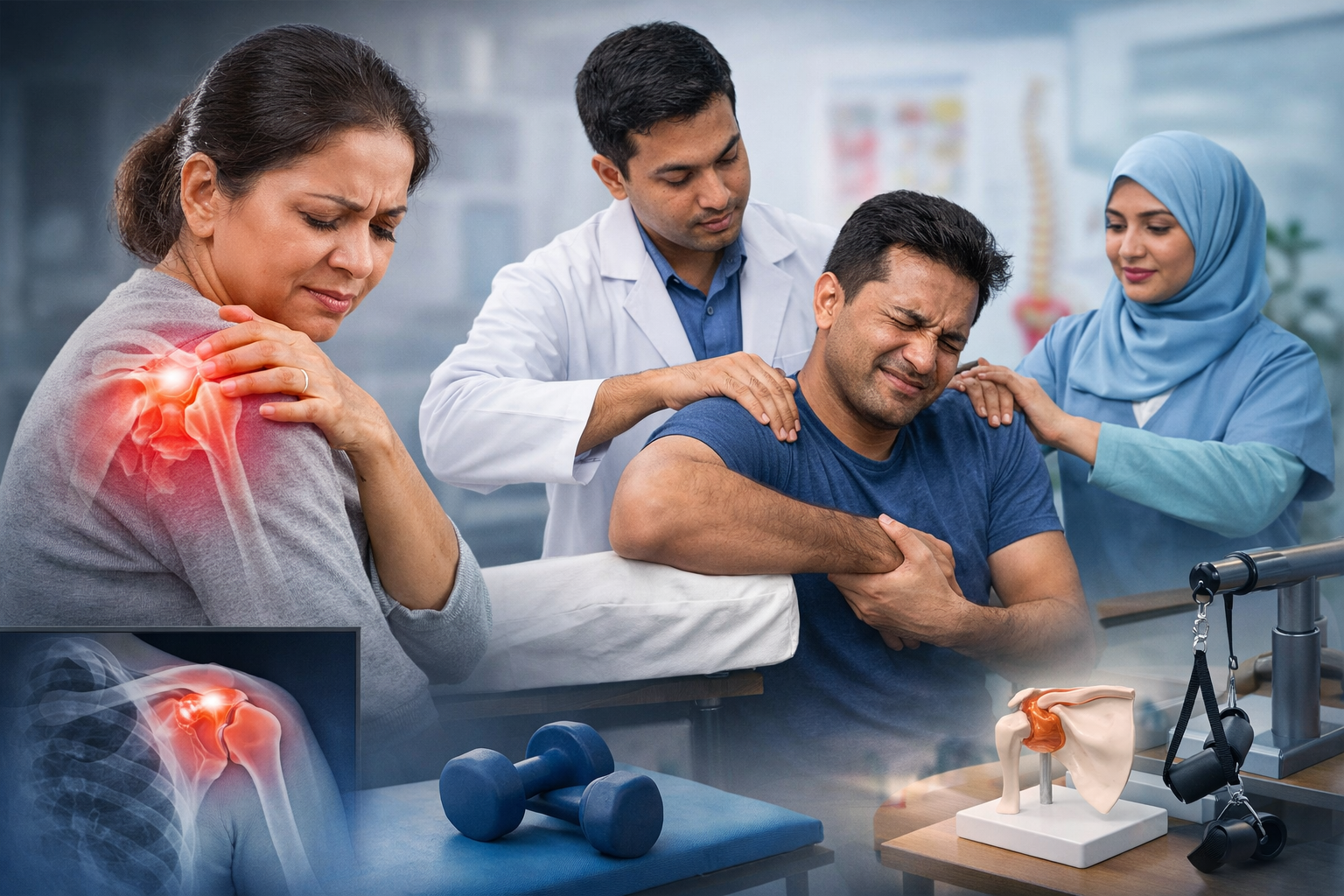
For many patients, frozen shoulder significantly disrupts daily life, making routine activities such as dressing, bathing, combing hair, lifting objects, or even sleeping comfortably extremely difficult. In Dhaka, frozen shoulder is often misunderstood and sometimes mismanaged. Many patients rely on painkillers for months or even years, receive repeated steroid injections, or are advised to “wait and see” without undergoing structured rehabilitation.
However, modern clinical evidence strongly supports expert physiotherapy as the most effective first-line treatment. For individuals searching for the best frozen shoulder doctor in Dhaka, ASPC Manipulation Therapy Centre has become a trusted destination under the clinical care of Dr. Mohammad Shahadat Hossain and the rehabilitation leadership of Dr. Sapia Akter.
Understanding Frozen Shoulder in Detail
Frozen shoulder is a condition in which the capsule surrounding the shoulder joint becomes inflamed, thickened, and progressively stiff. Over time, adhesions form within the joint capsule, restricting movement in all directions. Unlike muscle-related pain, this directly involves the joint structure and evolves through distinct stages.
1. Freezing Stage
Characterized by increasing shoulder pain, especially during movement and at night. Sleep disturbance is common and patients often experience anxiety due to worsening pain.
2. Frozen Stage
Pain may become less intense, but stiffness becomes severe. Movement is significantly restricted, making daily activities like grooming extremely difficult.
3. Thawing Stage
Shoulder movement gradually improves. However, without guided physiotherapy, recovery may be incomplete, leaving residual stiffness and weakness.
Who Is Most at Risk in Dhaka?
In the Dhaka population, frozen shoulder commonly affects individuals between 40 and 65 years of age. Key risk groups include:
Symptoms & Daily Impact
Patients with frozen shoulder often report persistent shoulder pain at night, difficulty lifting the arm, and inability to reach behind the back. These symptoms significantly affect quality of life, productivity, and emotional well-being.
Expert Clinical Leadership at ASPC
Dr. Mohammad Shahadat Hossain, PT is widely regarded as one of the most experienced clinicians for frozen shoulder management in Dhaka. His expertise lies in understanding shoulder joint biomechanics and applying stage-appropriate, evidence-based treatment strategies.
Dr. Sapia Akter, PT plays a crucial role in the rehabilitation phase. Her expertise lies in structured exercise therapy, patient education, and functional retraining, ensuring that clinical improvements translate into long-term functional gains.
The ASPC Treatment Approach
Detailed Assessment
Includes pain history, movement analysis, postural screening, and differentiation from other conditions like rotator cuff tears.
Pain Management
Gentle manual therapy and soft tissue techniques are used to reduce pain without aggravating inflammation.
Joint Mobilization
Carefully graded techniques stretch the joint capsule safely. Intensity is adjusted based on the stage of the disease.
SDM Method
Optimizing spinal and shoulder girdle biomechanics to reduce abnormal stress on the joint and support recovery.
ASPC vs. Generalized Hospital Protocols
In Dhaka, patients often seek treatment at large hospitals where the focus may primarily be on medication, injections, or routine passive electrotherapy (Ultrasound, TENS). While these methods reduce pain temporarily, they often do not address the deeper joint capsule stiffness.
The ASPC Difference: Our approach centers on restoring natural shoulder biomechanics through precise joint mobilization, manipulation therapy, and progressive functional exercises. We provide individualized care with high-touch manual therapy, avoiding generalized protocols that can limit recovery speed.
Specialized Rehabilitation Units
Long-Term Outcomes
With timely and expert physiotherapy at ASPC, most patients achieve significant pain reduction, improved shoulder mobility, and greater independence. We prioritize ethical care, ensuring that surgery is always the last option, considered only after a prolonged failure of conservative management.
Conclusion
ASPC Manipulation Therapy Centre has established itself as one of Dhaka’s most reliable and scientifically driven rehabilitation facilities. Led by Dr. Mohammad Shahadat Hossain, PT and Dr. Sapia Akter, PT, the center combines detailed clinical assessment with stage-specific manual therapy to help patients recover safely and effectively. By restoring normal shoulder biomechanics and ensuring long-term recovery, ASPC helps individuals in Dhaka reclaim their mobility and return to daily life with confidence.