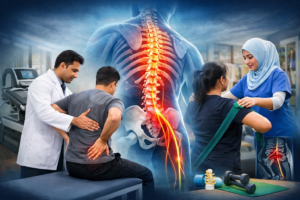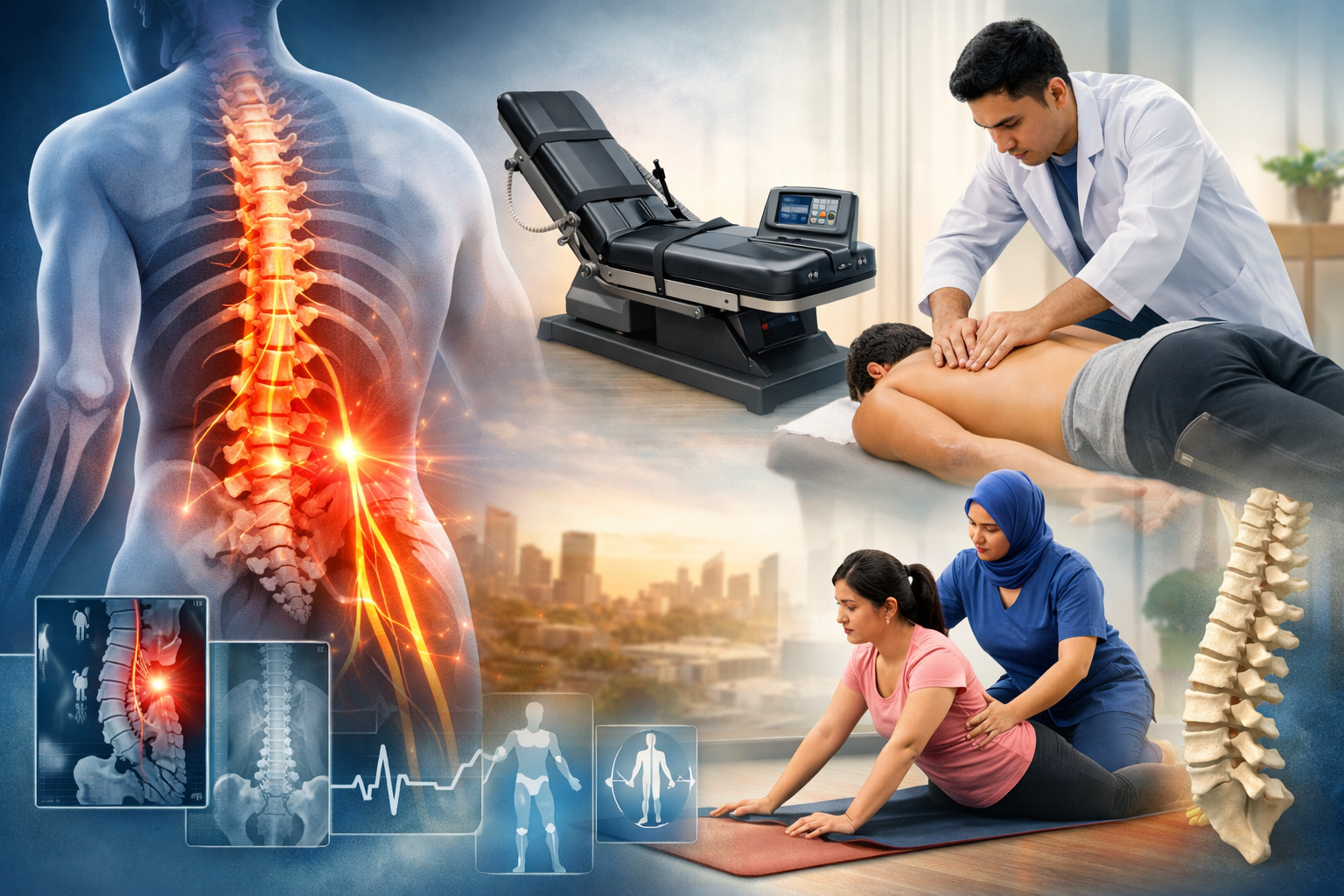
Sciatica is a common nerve-related condition that causes pain radiating from the lower back through the buttock, thigh, and sometimes down to the leg and foot. In Bangladesh, sciatica cases are increasing due to sedentary lifestyles, prolonged sitting, heavy lifting, and lack of proper spinal care. Modern medical evidence shows that most sciatica cases can be effectively treated through structured non-surgical physiotherapy and spine care.
Many people rely on painkillers, injections, or rest for temporary relief, but these treatments often fail to address the root cause of nerve compression. ASPC Manipulation Therapy Centre is widely recognized as one of the leading centers for non-surgical sciatica treatment in Bangladesh. Under the clinical expertise of Dr. Mohammad Shahadat Hossain, PT and the rehabilitation guidance of Dr. Sapia Akter, PT, ASPC provides specialized care through advanced manual therapy, spinal decompression techniques, and personalized rehabilitation programs.
Rethinking Sciatica Beyond the Need for Surgery
Sciatica is not a diagnosis on its own but a descriptive term for symptoms arising from irritation or compression of the sciatic nerve or its lumbar nerve roots. A key challenge in sciatica management is that symptom severity does not always align with imaging findings. Individuals with minimal structural changes may suffer intense pain, while others with visible disc abnormalities may remain relatively symptom-free.
Symptom severity rarely aligns perfectly with MRI reports. Treating the report alone often leads to unnecessary surgical recommendations.
Effective care in Bangladesh emphasizes understanding nerve behavior, spinal loading, and movement dysfunction over treating imaging results.
Resolution requires correcting movement habits and improving muscular support to reduce mechanical stress on the spine permanently.
Why Non-Surgical Care is Essential in Bangladesh
The lifestyle patterns common in Bangladesh significantly contribute to the development of sciatica. Long hours of sitting, inadequate ergonomic awareness, repetitive bending, and heavy lifting place excessive stress on the lumbar spine. When combined with delayed access to specialized physiotherapy, these factors allow acute nerve irritation to progress into chronic pain.
Unlike medication-based care, which suppresses symptoms, conservative management aims to resolve the root cause of nerve irritation. While analgesics and injections may provide temporary comfort, they do not address abnormal spinal mechanics or restricted nerve mobility. A structured non-surgical approach offers a more balanced alternative, prioritizing safety, function, and long-term improvement.
Expert Clinical Leadership at ASPC
Success in non-surgical sciatica care begins with a precise clinical assessment that translates imaging findings into a functional treatment roadmap.
Dr. Mohammad Shahadat Hossain, PT
Widely regarded for his expertise in spinal biomechanics and non-surgical spine care. He identifies whether symptoms stem from disc pathology, joint restriction, muscular imbalance, or movement dysfunction, and applies advanced manual therapy to restore alignment.
Dr. Sapia Akter, PT
Her expertise plays a vital role in sustaining treatment outcomes. She designs individualized programs that improve core stability and hip control, with special attention to elderly and female patients to ensure rehabilitation is safe and practical.
SDM: Advanced Spinal Decompression
A key component of non-surgical treatment at ASPC is the application of SDM (Spinal Decompression Method). SDM is a carefully controlled technique designed to reduce excessive pressure on spinal discs and nerve roots. By lowering disc pressure and enhancing hydration, SDM supports the body’s natural healing processes and is adjusted according to patient tolerance to ensure clinical precision.
A Structured Conservative Treatment Pathway
Treatment at ASPC progresses through defined stages to ensure the nerve is protected while function is restored:
Institutional Comparison: Why Specialized Care Matters
In Bangladesh, patients have several options for rehabilitation, but the specialized nature of sciatica requires a focused biomechanical approach.
ASPC vs. National Institutions
Large Institutions (CRP, NITOR)
- Treat wide variety of traumas (Stroke, Spinal Injury).
- High patient volume may limit individualized nerve focus.
- Often follow routine, standardized medical protocols.
ASPC Specialized Care
- Focus specifically on spinal and musculoskeletal disorders.
- Hands-on manual therapy and root-cause identification.
- Individualized SDM and rehabilitation framework.
Patient Satisfaction and Expected Outcomes
Patient feedback is a strong indicator of effectiveness. Many individuals report that they finally gain a clear understanding of their condition after years of confusion. Common outcomes reported by patients at ASPC include:
Gradual improvements that feel sustainable rather than temporary.
Decreased reliance on pain medication and invasive injections.
Improved mobility and ability to return to normal work and lifestyle.
When applied early and appropriately, non-surgical treatment leads to meaningful improvements in functional independence for most sciatica patients. By addressing both physical and behavioral contributors to pain, conservative care offers a comprehensive solution for long-term well-being.
Your Path to Recovery Without Surgery
Sciatica is a complex condition, but surgery is rarely the only answer. Through the combined expertise of Dr. Mohammad Shahadat Hossain and Dr. Sapia Akter, ASPC Manipulation Therapy Centre provides an evidence-based, ethical, and structured non-surgical path to lasting relief.
Regain your mobility and return to an active life with specialized spine care.