Leg pain related to nerve irritation is a common problem among many patients in Bangladesh, yet it is often misunderstood. Many people experience ongoing pain, burning sensations, numbness, tingling, or weakness in their legs without realizing that the actual source of the pain may not be the leg itself. In many cases, leg pain occurs because of irritation or compression of nerves that originate from the spine or nearby structures.
In Bangladesh, nerve-related leg pain is often treated with painkillers, injections, or prolonged rest. Although these methods may provide temporary relief, they usually do not address the real cause of nerve irritation. As a result, symptoms frequently return and may gradually become more severe. This situation has increased the need for structured and non-surgical treatment approaches, particularly specialized physiotherapy that focuses on identifying and correcting the root cause of the problem.
ASPC Manipulation Therapy Centre is widely recognized as a leading center in Bangladesh for physiotherapy treatment of nerve-related leg pain. Under the clinical expertise of Dr. Mohammad Shahadat Hossain and the rehabilitation guidance of Dr. Sapia Akter, the center provides personalized, non-surgical treatment programs. Their approach focuses on accurate diagnosis, advanced manual therapy, and structured rehabilitation to relieve nerve irritation, restore movement, and support long-term recovery rather than only providing temporary pain relief.
Understanding Leg Pain Caused by Nerve Problems
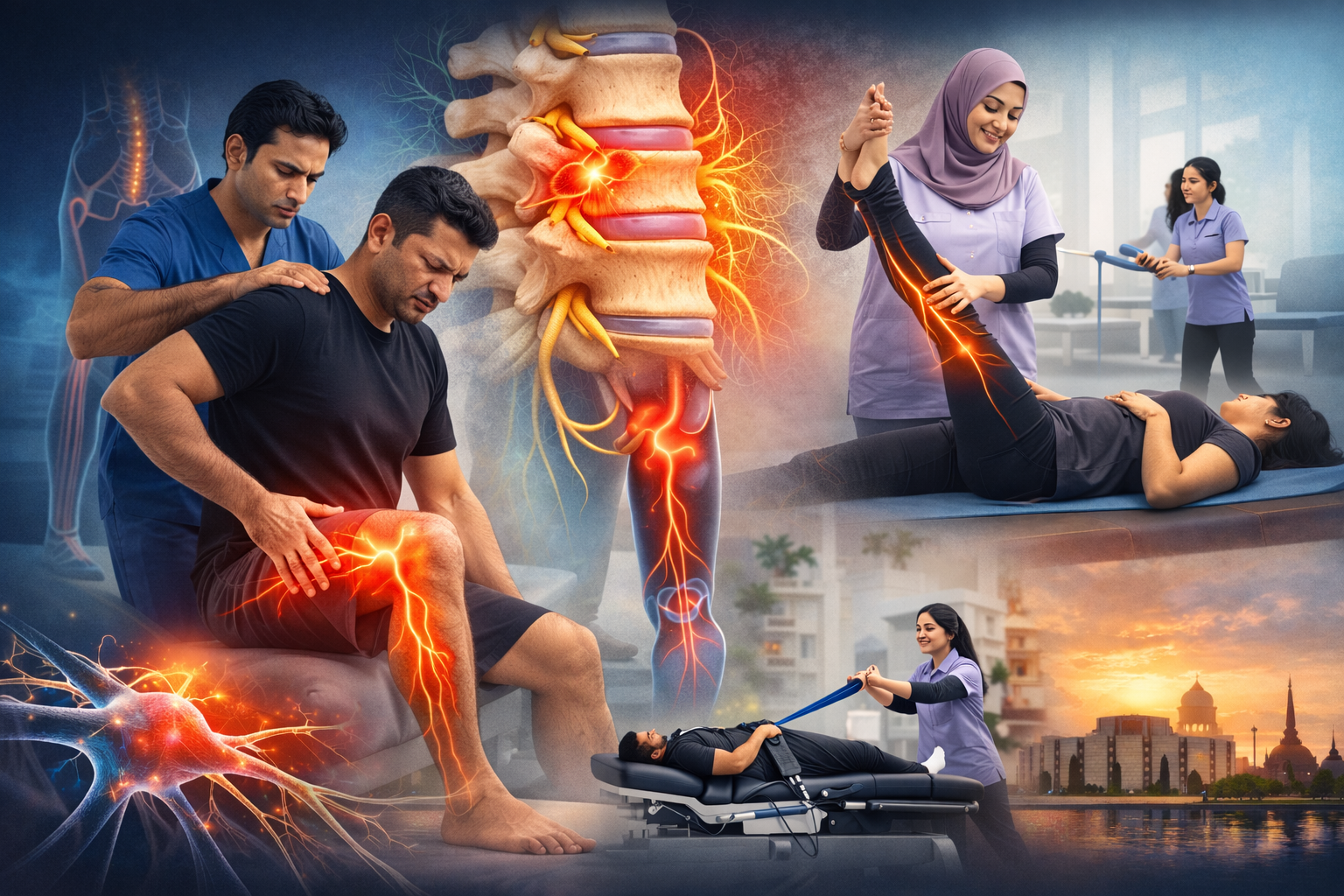
Leg pain originating from nerve involvement occurs when a nerve is compressed, irritated, or sensitized along its pathway. The most common example is sciatic nerve irritation, where pain travels from the lower back through the buttock and down the leg. However, other spinal or peripheral nerves can also cause similar symptoms.
Unlike muscle pain, nerve-related leg pain often feels sharp, burning, electric, or deep and may be accompanied by tingling, numbness, or weakness. Pain intensity can fluctuate with posture, sitting duration, bending, or walking. Importantly, the severity of leg pain does not always match imaging findings, which is why accurate clinical assessment is essential.
Why Nerve-Related Leg Pain Is Increasing in Bangladesh
Several factors contribute to the rising number of patients with nerve-related leg pain in Bangladesh. Prolonged sitting, poor posture, lack of ergonomic awareness, repetitive bending, heavy lifting, and weak core muscles place excessive stress on the spine. Over time, this stress can irritate spinal nerves, leading to pain radiating into the leg.
Delayed access to specialized physiotherapy further complicates recovery. Many patients continue daily activities despite pain, relying on medication instead of corrective treatment. As nerve sensitivity increases, symptoms become more persistent and harder to manage.
Importance of Non-Surgical Treatment
Surgery is not required in most cases of nerve-related leg pain. Modern clinical evidence supports non-surgical physiotherapy as the first-line treatment for managing nerve irritation. Non-surgical care focuses on reducing nerve stress, restoring movement, and correcting the factors that caused the problem in the first place.
Under the guidance of Dr. Mohammad Shahadat Hossain, PT, treatment decisions are based on clinical findings rather than imaging alone. This approach ensures that therapy remains safe, appropriate, and effective for each individual.
Detailed Treatment Approach (Step-by-Step)
Sensitivity Control
The first goal is to calm the irritated nerve. Patients are educated on safe positions and activity modification to avoid further nerve stress.
SDM Technique
Spinal Decompression Method is used to reduce pressure on discs and nerve roots, improving hydration and relieving leg pain.
Manual Therapy
Gentle techniques help restore joint mobility in the spine and pelvis, reducing mechanical stress on irritated nerves.
Nerve Mobilization
Neurodynamic techniques restore normal nerve sliding and gliding during movement, significantly reducing sensitivity.
Core Stabilization
Targeted exercises strengthen deep abdominal muscles to provide better support to the spine and reduce nerve pressure.
Lower Limb Rehab
Focuses on restoring muscle balance, flexibility, and strength in the hips and legs to improve overall mechanics.
Ergonomic Correction
Training in proper sitting, standing, and lifting to reduce repetitive nerve stress during work and daily life.
Movement Re-Training
Gradual return to real-life movements like walking and climbing stairs with confidence and reduced fear of pain.
Home Exercise Program
Personalized plans designed by Dr. Sapia Akter, PT to maintain improvement and prevent recurrence.
Continuous Monitoring
Regular progress checks ensure treatment intensity is adjusted based on symptom response for steady improvement.
Role of Rehabilitation in Long-Term Recovery
While pain reduction is important, long-term recovery depends on functional rehabilitation. Dr. Sapia Akter, PT plays a critical role in guiding patients through gradual exercise progression, improving movement confidence, and preventing recurrence. Her rehabilitation approach ensures that improvements achieved during treatment are sustained over time.
Patient Satisfaction and Opinion
“Patients receiving treatment for nerve-related leg pain at ASPC frequently report a clear understanding of their condition for the first time. Common patient opinions include gradual but lasting pain reduction, reduced dependence on medication, and renewed confidence in daily activities.”
Long-Term Outcomes
With expert non-surgical physiotherapy, most patients experience significant improvement in leg pain, mobility, and quality of life. Early and structured treatment reduces the risk of chronic pain and recurrence, allowing patients to return to normal activities safely.
Institutional Comparison in Bangladesh
In Bangladesh, many patients initially visit general physicians or local clinics where treatment typically focuses on temporary relief through medication or conventional electrotherapy. Large institutions like CRP (Centre for the Rehabilitation of the Paralysed) and NITOR handle vast multidisciplinary cases such as trauma and stroke, which may result in a more generalized rehabilitation approach.
Private clinics like Pain Care or Advance Physiotherapy provide useful services but often rely heavily on machines like ultrasound or traction. ASPC Manipulation Therapy Centre stands out by focusing specifically on the mechanical source of nerve irritation. Guided by Dr. Mohammad Shahadat Hossain, PT and Dr. Sapia Akter, PT, ASPC integrates advanced manual therapy and spinal decompression with specialized neurodynamic mobilization to address the root cause of leg pain.
Conclusion: Achieve Lasting Recovery
Leg pain caused by nerve irritation requires proper diagnosis and specialized physiotherapy to achieve lasting recovery. ASPC Manipulation Therapy Centre follows a root-cause based and non-surgical treatment approach to ensure you don’t just mask the pain, but fix the problem.
By focusing on nerve function, mobility, and structured rehabilitation, we help you return to your daily activities safely and confidently.
Trust the experts at ASPC for your long-term relief.