Physiotherapy Education in Bangladesh: A Comparative Analysis
Physiotherapy education in Bangladesh has expanded significantly in recent years as awareness of rehabilitation and non-invasive healthcare grows. With the rising burden of musculoskeletal disorders, neurological conditions, post-surgical rehabilitation needs, and chronic lifestyle-related diseases, the demand for qualified physiotherapists has increased across the country. In response, multiple physiotherapy colleges—both in Dhaka and outside—have been established to meet this growing demand.
However, not all physiotherapy colleges in Bangladesh offer the same quality of education, training, or professional preparation. A nationwide comparison between Agrani College of Physiotherapy and Health Science (ACPHS) and other physiotherapy colleges in Bangladesh highlights important differences that directly impact student outcomes.
National Landscape of Physiotherapy Education
Across Bangladesh, physiotherapy colleges vary widely in terms of infrastructure, faculty quality, curriculum implementation, and clinical exposure.
Challenges Outside Major Cities
- Limited access to specialized hospitals
- Fewer rehabilitation centers for clinical training
- Restricted exposure to diverse patient populations
ACPHS Strategic Advantage
- Guaranteed clinical placements
- Exposure to diverse medical specialties
- Structured and supervised training protocols
Institutional Vision and Long-Term Commitment
ACPHS Priorities
- Controlled class sizes for better learning
- Consistent academic monitoring
- Continuous improvement in facilities
- Long-term professional development
General Market Trends
- Focus primarily on expanding enrollment
- Potential compromise on faculty-to-student ratios
- Limited clinical partnership depth
Faculty Quality and Academic Support
Faculty expertise remains a major challenge nationwide. Some colleges rely heavily on part-time instructors or face shortages of qualified physiotherapists.
The ACPHS Model
ACPHS maintains full-time experienced faculty who serve as educators, mentors, and professional guides, ensuring active supervision of labs and clinics.
Standard College Model
Limited interaction with faculty can reduce opportunities for feedback, clarification, and the critical academic growth required in healthcare.
Infrastructure and Learning Facilities
Infrastructure quality varies widely. Many institutions operate with limited laboratory space or outdated equipment.
- Modern physiotherapy laboratories
- Updated electrotherapy and exercise therapy equipment
- Comprehensive academic libraries and digital learning resources
Professional Ethics and Career Preparation
Professionalism and ethical practice are essential in healthcare. ACPHS integrates professional ethics, communication skills, and patient-centered care into its academic culture.
Student Outcomes
- Strong clinical skills
- Professional confidence
- Ethical awareness
- Job readiness
Core Competencies
- Respecting patient dignity
- Effective communication
- Evidence-based practices
- Clinical reasoning
ACPHS: A National Standard of Quality
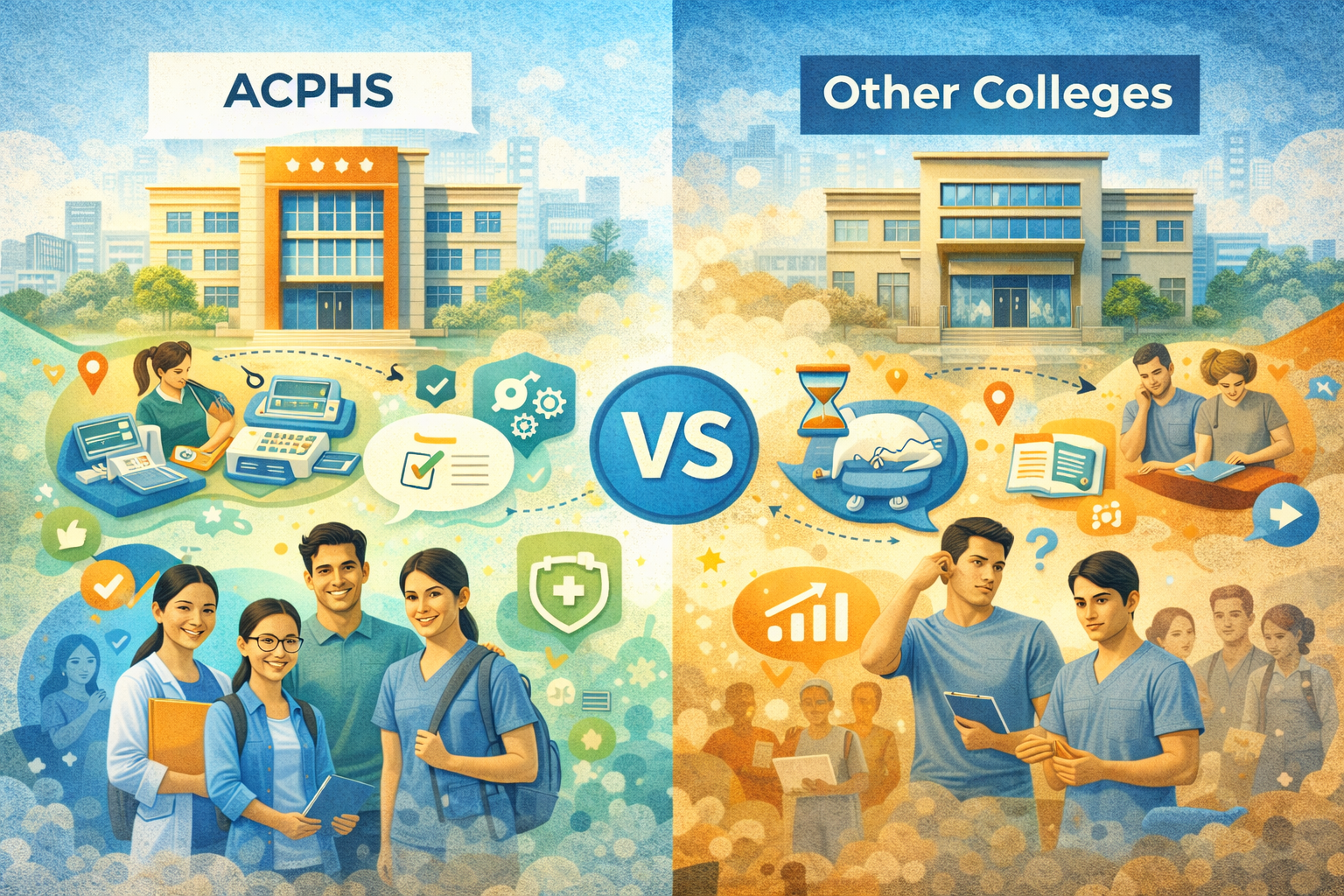
Comparing ACPHS with other physiotherapy colleges in Bangladesh reveals clear differences in academic vision, educational quality, and student support. While many institutions contribute to physiotherapy education, ACPHS stands out through its structured approach, modern facilities, and commitment to student success.
For students seeking a reliable, comprehensive, and future-ready physiotherapy education, ACPHS represents the benchmark institution for professional growth.