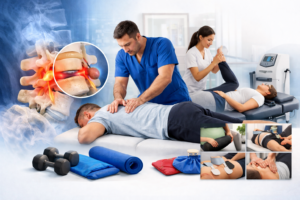
Leg pain caused by nerve irritation is a common yet often misunderstood problem among patients in Bangladesh. Many individuals experience persistent pain, burning sensations, numbness, or weakness without clearly understanding that the source is often the spine or surrounding structures rather than the leg itself.
In Bangladesh, leg pain is frequently treated with painkillers or rest, which often fail to correct the underlying cause. This has increased the demand for structured, non-surgical leg pain treatment, particularly through specialized physiotherapy.
A leading center providing such care is ASPC Manipulation Therapy Centre, under the clinical leadership of Dr. Mohammad Shahadat Hossain and the rehabilitation guidance of Dr. Sapia Akter.
Understanding Leg Pain Caused by Nerve Problems
Unlike muscle pain, nerve-related leg pain often feels sharp, burning, or electric. It can fluctuate with posture or walking. Common examples include sciatic nerve irritation, where pain travels from the lower back through the buttock and down the leg.
Why Nerve-Related Leg Pain Is Increasing
Prolonged sitting, poor posture, and lack of ergonomic awareness place excessive stress on the spine. Relying solely on medication instead of corrective treatment often leads to increased nerve sensitivity and persistent symptoms.
Importance of Non-Surgical Treatment
Surgery is not required in most cases. Modern clinical evidence supports non-surgical physiotherapy as the first-line treatment, focusing on reducing nerve stress and restoring movement through clinical findings rather than imaging alone.
Detailed Treatment Approach
Our structured clinical pathway ensures a safe and effective recovery for every individual:
Pain & Sensitivity Control
We calm irritated nerves through activity modification and education on safe positioning, avoiding aggressive exercises in the early phase.
Spinal Decompression (SDM)
A key technique to reduce pressure on spinal discs and nerve roots, improving disc hydration and relieving leg pain under expert supervision.
Manual Therapy
Gentle techniques applied to the spine and pelvis to restore joint mobility and reduce mechanical stress on nerve structures.
Nerve Mobilization
Neurodynamic therapy helps restore normal nerve sliding and gliding, reducing sensitivity during daily movements.
Core Stabilization
Strengthening deep abdominal and spinal muscles to provide better support and reduce future pressure on spinal nerves.
Lower Limb Rehab
Focusing on muscle balance, flexibility, and strength in the hips and legs to improve overall mechanics.
Ergonomic Correction
Training in proper sitting, standing, and lifting postures to reduce repetitive stress during work and home activities.
Functional Re-Training
Gradual return to real-life movements like stair climbing and walking to build confidence and reduce fear of pain.
Customized Home Plan
Personalized exercise programs designed by Dr. Sapia Akter to maintain improvements and prevent recurrence.
Continuous Monitoring
Regular progress checks to adjust treatment intensity based on symptom response for steady improvement.
Role of Rehabilitation in Recovery
Long-term recovery depends on functional rehabilitation. Dr. Sapia Akter guides patients through gradual exercise progression, ensuring that improvements achieved during treatment are sustained over time.
Patient Feedback & Satisfaction
Conclusion: A Path to Independence
Leg pain caused by nerve irritation does not automatically require surgery. At ASPC Manipulation Therapy Centre, our patient-centered approach focuses on correcting the underlying problem and restoring long-term independence under the leadership of Dr. Mohammad Shahadat Hossain and Dr. Sapia Akter.