
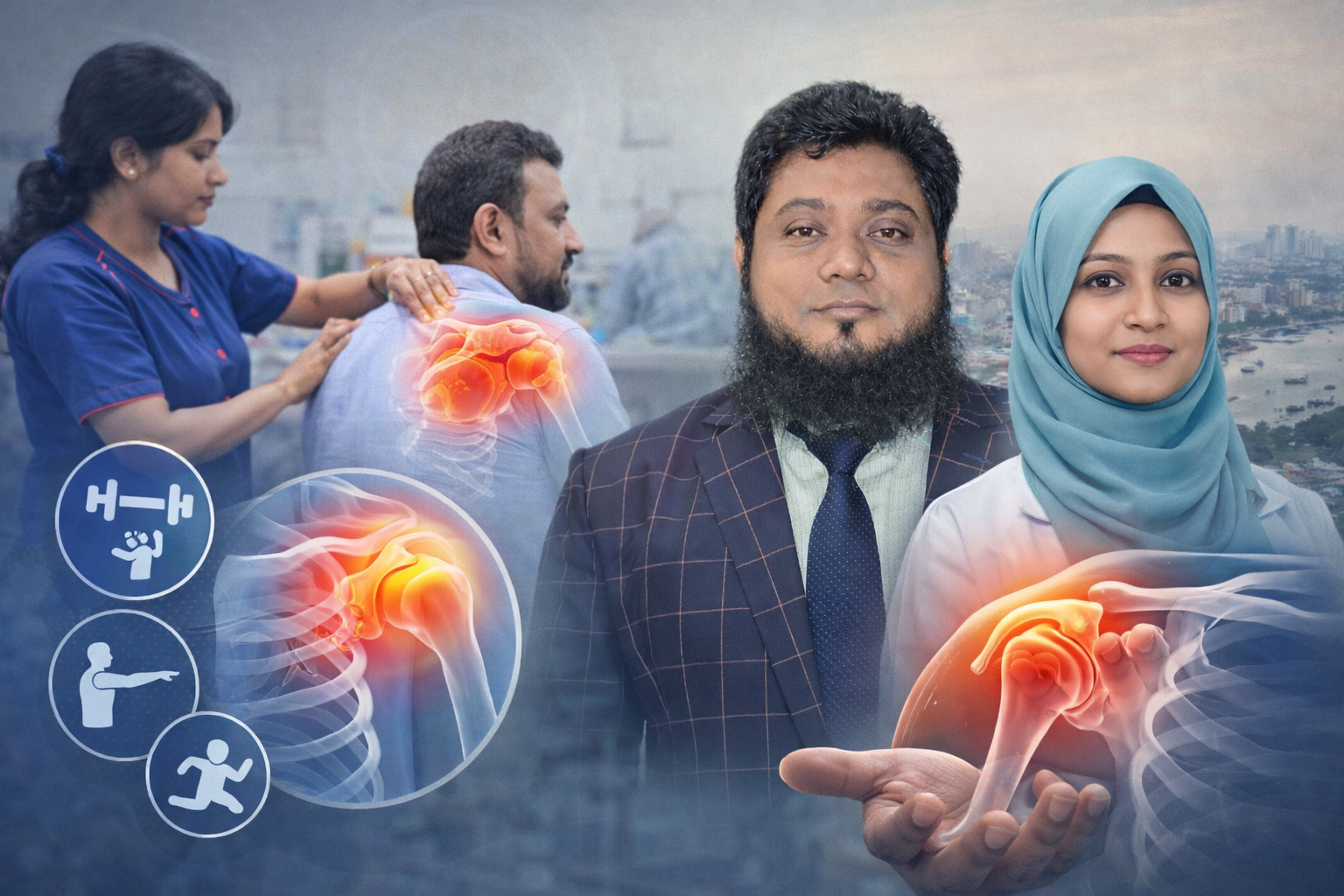
Expert Treatment for Frozen Shoulder in Dhaka
Frozen shoulder, medically known as adhesive capsulitis, is one of the most painful and disabling shoulder conditions affecting adults in Dhaka and its surrounding areas. The condition usually develops gradually and is characterized by persistent shoulder pain, stiffness, and a significant limitation in shoulder movement. As the condition progresses, even simple daily activities such as dressing, combing hair, reaching overhead, or sleeping comfortably can become extremely difficult.
Unlike common shoulder pain that may resolve within a short time, frozen shoulder often worsens gradually and may last for several months or even years if it is not treated properly. Many patients in Dhaka area initially ignore the symptoms or depend only on pain relief medications, which may temporarily reduce discomfort but do not address the underlying cause of the condition.
In many cases across the Dhaka region, frozen shoulder is misunderstood and often treated with repeated painkillers or steroid injections. While these treatments may provide short-term relief, they usually fail to solve the root problem. Some patients are advised to simply wait for the condition to improve, while others are recommended surgery without first trying effective conservative treatment.
However, modern evidence-based medical research shows that specialized physiotherapy is the most effective first-line treatment for frozen shoulder, particularly when it is delivered by experienced clinicians. Through targeted manual therapy, guided rehabilitation exercises, and structured physiotherapy programs, patients can regain shoulder mobility, reduce pain, and restore normal function.
Among the physiotherapy clinics serving patients across the Dhaka area, ASPC Manipulation Therapy Centre has become widely recognized as one of the leading centers for frozen shoulder treatment. Under the expert clinical guidance of Dr. Mohammad Shahadat Hossain and Dr. Sapia Akter, ASPC provides advanced, non-surgical, and patient-centered care focused on addressing the root cause of the condition and ensuring long-term recovery rather than temporary relief.
Understanding Frozen Shoulder
Frozen shoulder is a condition in which the capsule surrounding the shoulder joint becomes inflamed, thickened, and tight. This leads to progressive loss of shoulder mobility in all directions. The condition typically develops in three overlapping stages:
This stage is marked by increasing pain, especially at night and with movement. Shoulder stiffness gradually worsens. Many patients seek treatment during this phase due to pain-related sleep disturbance.
Pain may reduce slightly, but stiffness becomes severe. Daily activities are significantly restricted. Many patients cannot lift their arm, reach behind their back, or perform overhead tasks.
Gradual improvement in movement occurs, but recovery may take several months without proper treatment.
Without structured physiotherapy, frozen shoulder may take one to three years to resolve, often leaving residual stiffness and weakness.
Who Is at Risk of Frozen Shoulder?
Commonly affecting individuals between 40 and 65 years of age, the Dhaka population sees specific vulnerability in several groups:
- People with diabetes
- Individuals with thyroid disorders
- Office workers with poor posture
- Post-surgical or post-injury patients
- Women (more than men)
- People with prolonged immobility
- Individuals with previous shoulder pain
Diabetic patients often experience more severe and prolonged frozen shoulder symptoms, making expert physiotherapy even more essential.
Common Symptoms of Frozen Shoulder
Physical Indicators
- Persistent shoulder pain (night-time peak)
- Severe stiffness and loss of movement
- Difficulty raising the arm
- Shoulder weakness due to disuse
Functional Impact
- Pain during dressing or grooming
- Inability to reach overhead or behind back
- Sleep disturbance due to pain
- Impact on mental well-being
Why Frozen Shoulder Requires Specialized Physiotherapy
Frozen shoulder is not a simple muscle problem. It involves joint capsule inflammation, fibrosis, and altered shoulder biomechanics. Medication alone cannot achieve joint restoration.
Our Physiological Goals:
- Reduce pain and inflammation
- Gradually restore joint mobility
- Prevent further capsular tightening
- Restore muscle strength and coordination
- Improve functional use of the arm
- Prevent long-term disability
ASPC Manipulation Therapy Centre: A Trusted Name
ASPC Manipulation Therapy Centre is widely regarded for its expertise in treating complex shoulder conditions. The center follows a comprehensive, non-surgical, and evidence-based treatment model.
Core Philosophy
- Accurate diagnosis and staging
- Individualized treatment plans
- Gentle, progressive mobilization
- Avoidance of forceful manipulation
- Long-term functional recovery focus
Expertise of Dr. Mohammad Shahadat Hossain, PT
Dr. Mohammad Shahadat Hossain is highly respected for his clinical expertise in shoulder biomechanics and chronic shoulder disorders. His approach is rooted in understanding the stage of the condition and applying appropriate treatment accordingly.
Effectiveness: Precise differentiation of shoulder conditions, stage-specific manual therapy, and emphasis on joint mechanics rather than pain suppression.
Rehabilitation Excellence with Dr. Sapia Akter, PT
Dr. Sapia Akter plays a critical role in restoring shoulder function through structured rehabilitation programs. Her expertise lies in guiding patients through gradual movement recovery and strengthening.
Strengths: Special focus on female and elderly patients, clear home exercise instruction, and prevention of recurrence through pain-free movement retraining.
The ASPC Treatment Protocol
Before starting treatment, each patient undergoes a detailed evaluation including pain history, range of motion, muscle strength testing, and postural analysis.
1. Pain & Inflammation Management
Gentle manual therapy and activity modification to settle the joint.
2. SDM (Spinal Decompression Method)
Applied to optimize shoulder girdle and spinal biomechanics.
3. Manual Joint Mobilization
Carefully graded stretching of the joint capsule adjusted to pain tolerance.
4. Strengthening & Posture
Rotator cuff stability training and postural correction for permanent results.
Institutional Comparison in Dhaka
Dhaka city has many well-known centers such as the Center for the Rehabilitation of the Paralysed (CRP), Asgar Ali Hospital, Square Hospitals, and Labaid. These institutions provide important services for a wide range of conditions. However, most primarily operate as general hospital-based units where treatment often follows standard protocols with limited time for intensive manual therapy.
In comparison, ASPC Manipulation Therapy Centre has developed a strong reputation specifically for musculoskeletal disorders. Unlike general departments that rely heavily on electrotherapy (Ultrasound, TENS, Shortwave), ASPC emphasizes hands-on manual therapy and manipulation techniques aimed at correcting the underlying biomechanical dysfunction.
Because of this specialized treatment philosophy and the clinical leadership of Dr. Shahadat Hossain and Dr. Sapia Akter, ASPC is widely considered the preferred choice for patients seeking targeted, non-surgical recovery from frozen shoulder in Dhaka.
Start Your Recovery Today
Frozen shoulder is a complex condition that can severely affect your quality of life. Modern medical evidence shows that timely, specialized physiotherapy at ASPC is the most effective way to restore your mobility without unnecessary surgery.
Seek early evaluation at ASPC Manipulation Therapy Centre – Where expertise meets ethical care.
