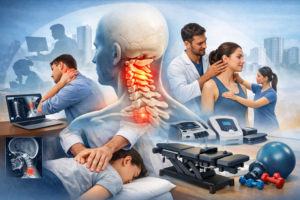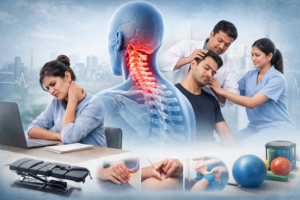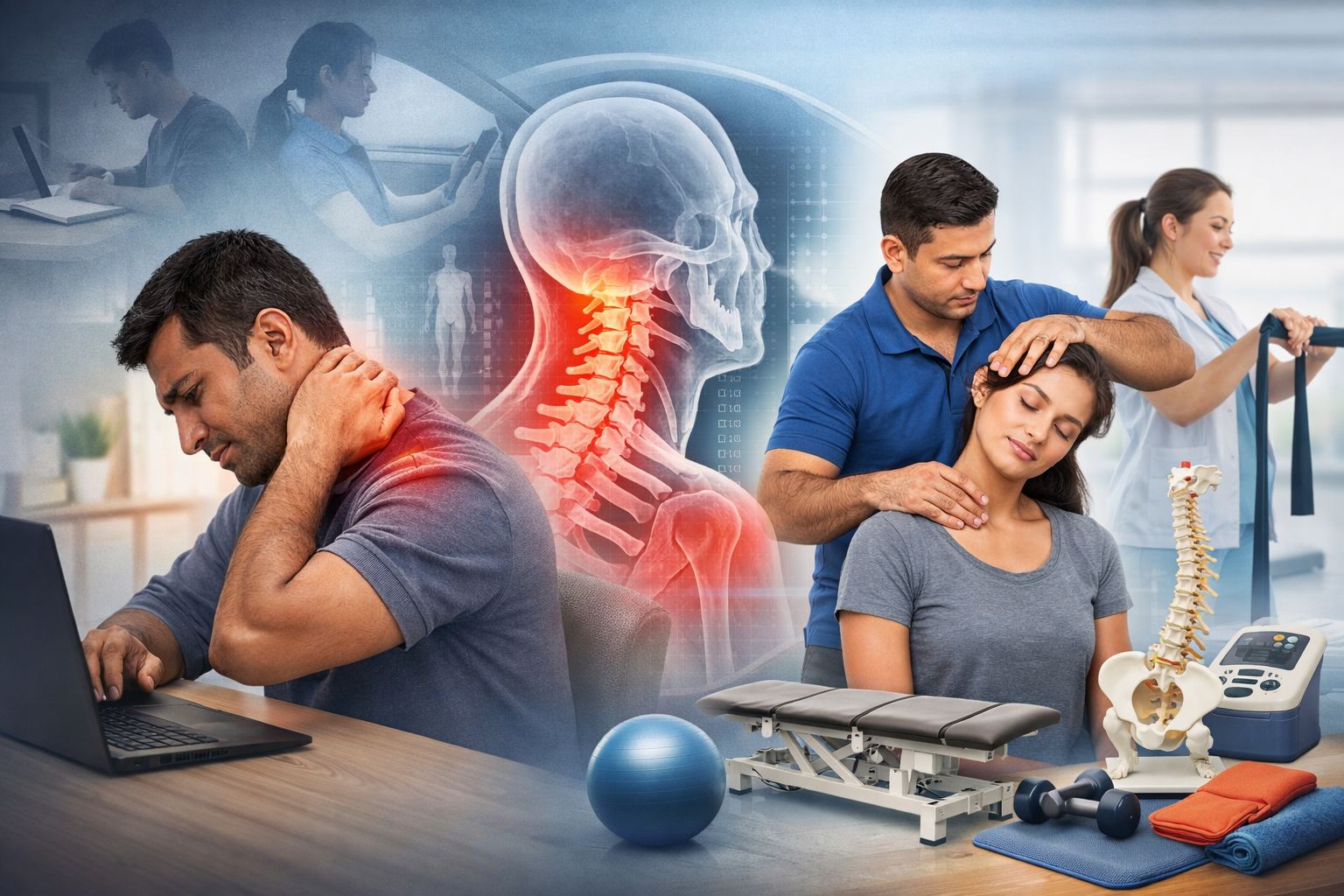
Neck stiffness has become a common musculoskeletal complaint among people in Bangladesh. With the rapid expansion of digital lifestyles, many individuals spend long hours using computers, smartphones, and other electronic devices. Prolonged screen exposure, poor posture, and limited physical activity place continuous stress on the cervical spine, increasing the risk of stiffness and restricted neck movement.
As a result, many individuals experience symptoms such as neck tightness, reduced mobility, shoulder discomfort, headaches, and difficulty maintaining proper posture during daily activities. Office workers, students, drivers, and professionals are particularly vulnerable to these problems because their work often requires extended periods of sitting and repetitive neck positions.
For many people, neck stiffness initially appears as mild tightness after long working hours. However, if the underlying mechanical causes are not properly identified and treated, the condition may gradually worsen. Individuals may find it difficult to turn their head, maintain a comfortable sitting position, or perform routine tasks such as working on a computer, reading, or driving.
Despite the high prevalence of neck stiffness, many people rely on temporary solutions such as pain medication, massage therapy, or basic physiotherapy treatments. While these approaches may provide short-term relief, they often fail to address the structural and functional problems affecting the cervical spine. As a result, symptoms may recur or gradually become more persistent.
This growing health concern highlights the importance of specialized physiotherapy centers that focus on accurate diagnosis, structured rehabilitation, and non-surgical spinal care. Effective management of neck stiffness requires detailed clinical assessment, targeted physiotherapy techniques, and rehabilitation programs designed to restore normal spinal movement.
Among the physiotherapy centers in Bangladesh, ASPC Manipulation Therapy Centre has earned a strong reputation as one of the leading institutions for the treatment of neck stiffness and other spinal conditions through advanced physiotherapy and rehabilitation methods.
Founded by Dr. Mohammad Shahadat Hossain, PT, and Dr. Sapia Akter, PT, ASPC provides comprehensive treatment programs focused on identifying the root causes of neck stiffness, improving cervical mobility, and restoring healthy spinal function for long-term recovery.
Understanding Neck Stiffness from a Clinical Perspective
Neck stiffness is a condition characterized by restricted movement of the cervical spine, often accompanied by muscle tightness and discomfort. It may occur suddenly after prolonged posture or develop gradually due to chronic mechanical stress.
The cervical spine consists of seven vertebrae that support the head, protect the spinal cord, and allow movement in multiple directions. Because the neck must support the weight of the head while remaining highly mobile, it is particularly vulnerable to strain.
Anatomical Contributors:
Common Causes of Neck Stiffness:
- Prolonged poor posture
- Long hours of computer or smartphone use
- Muscle imbalance and weakness
- Cervical disc degeneration
- Joint stiffness or inflammation
- Stress and muscle tension
- Previous injuries or trauma
An important clinical observation is that the intensity of symptoms does not always correspond to imaging findings. Some individuals may experience severe stiffness even when MRI findings are minimal. This highlights the importance of functional clinical assessment, which evaluates posture, movement patterns, muscle strength, and spinal mobility rather than relying solely on imaging reports.
Why Choosing the Right Physiotherapy Center Matters?
The effectiveness of treatment for neck stiffness largely depends on the quality of physiotherapy care a patient receives. Many individuals undergo treatments that focus only on temporary symptom relief rather than addressing the underlying mechanical causes of the condition.
Risks of Incomplete Treatment:
Clinical Leadership at ASPC
Dr. Mohammad Shahadat Hossain is widely recognized for his expertise in spinal biomechanics and manipulation therapy. He serves as the Chairman and Chief Consultant of ASPC Manipulation Therapy Centre and is considered one of the pioneers of manual therapy practice in Bangladesh.
He holds BSPT and MSc degrees in Physiotherapy from the University of Dhaka and has received advanced training in international techniques including manipulation therapy, McKenzie method, Mulligan concept, and dry needling. His approach identifies mechanical causes through detailed assessment of posture, muscle coordination, and joint mobility.
Successful recovery from neck stiffness requires more than temporary symptom relief. Dr. Sapia Akter plays an important role in guiding patients through structured rehabilitation programs. Her approach focuses on restoring functional movement while protecting the cervical spine from further strain.
- Therapeutic exercise–based rehabilitation
- Postural correction strategies
- Functional activity training
- Long-term prevention of recurrence
Comprehensive Physiotherapy Treatment Approach
ASPC Manipulation Therapy Centre follows a structured physiotherapy rehabilitation model designed to address both the symptoms and the underlying causes of neck stiffness.
Long-Term Outcomes of Treatment
Evidence-based physiotherapy rehabilitation can provide significant long-term benefits for individuals suffering from neck stiffness. When treatment focuses on correcting the underlying mechanical causes, patients often experience lasting improvement in mobility and physical function.
As a result, patients may experience sustained reduction in neck stiffness, improved cervical mobility, enhanced muscle strength and stability, and better posture control. In addition, effective rehabilitation can reduce the recurrence of neck problems, improve performance in everyday tasks, and contribute to a better overall quality of life.
Patient Experience and Satisfaction
At ASPC Manipulation Therapy Centre, many patients report a positive rehabilitation experience and noticeable improvement in their comfort levels.
- Gradual reduction in neck stiffness and discomfort
- Improved neck mobility and flexibility
- Better posture during work and daily activities
- Reduced reliance on pain medication
- Increased confidence in performing routine movements
Institutional Comparison
Bangladesh has several well-known institutions such as CRP, NITOR, Square Hospital, Labaid, Ibn Sina, Popular, and Bangladesh Spine & Orthopaedic Hospital. These organizations play an important role in providing general physiotherapy services.
The ASPC Difference: While large hospitals operate as multidisciplinary healthcare systems where physiotherapy is a supportive unit, ASPC focuses specifically on spinal and musculoskeletal rehabilitation. This specialized focus enables more detailed functional assessment and active rehabilitation methods aimed at long-term stability rather than just managing symptoms with medication or passive modalities.
Safe, Effective, Non-Surgical Recovery
Neck stiffness is a common problem that can significantly affect your quality of life. Don’t rely on temporary relief—choose a treatment plan that addresses the root cause.
ASPC Manipulation Therapy Centre is recognized as one of the most trusted and specialized rehabilitation centers in Bangladesh.