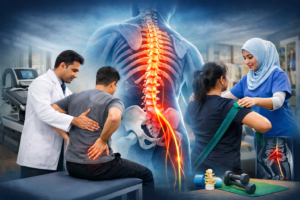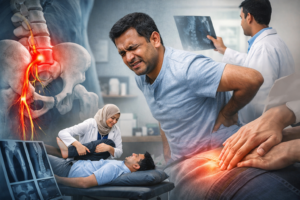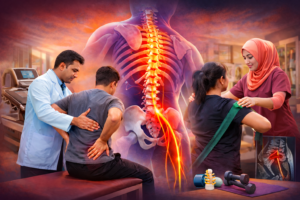
Sciatica is a common nerve-related condition that causes pain radiating from the lower back through the buttock, thigh, and down to the leg and foot. In Dhaka, sciatica cases are increasing due to sedentary lifestyles, long working hours, traffic-related immobility, and lack of proper spinal care. Modern medical research shows that structured physiotherapy and conservative spine care are the most effective first-line treatments for most sciatica cases.
ASPC Manipulation Therapy Centre is widely recognized as one of the leading centers for non-surgical sciatica physiotherapy in Dhaka. Under the clinical expertise of Dr. Mohammad Shahadat Hossain and the rehabilitation guidance of Dr. Sapia Akter, ASPC provides specialized care through advanced manual therapy and personalized rehabilitation programs.
Understanding Sciatica: A Physiotherapy Perspective
Sciatica is not a disease in itself; it is a collection of symptoms caused by irritation, compression, or sensitization of the sciatic nerve. From a physiotherapy standpoint, sciatica is particularly challenging because pain patterns do not always correlate with imaging findings. This disconnect highlights a crucial truth: sciatica is not only a structural problem, but also a functional and neurological one.
Why Sciatica is Rising in Dhaka
Prolonged sitting in poorly designed office chairs and traffic-related immobility in Dhaka contribute heavily to spinal stress.
Weak core and hip muscles, combined with repetitive bending or lifting in demanding jobs, increase nerve irritation risk.
Many rely on painkillers which temporarily mask symptoms but fail to address the underlying mechanical cause of nerve compression.
The Expert Clinical Team at ASPC
Effective recovery requires identifying the root cause—whether it is disc-related, joint-related, or muscular. ASPC’s integrated model combines diagnosis with functional movement retraining.
Dr. Mohammad Shahadat Hossain, PT
A pioneer of manual therapy in Bangladesh and founder of the SDM concept. He focuses on identifying the exact mechanical cause of compression through detailed assessment of posture and nerve sensitivity.
Dr. Sapia Akter, PT
Specializes in translating clinical diagnosis into functional improvement. Her programs rebuild muscular support and confidence, with special attention to the needs of female and elderly patients.
SDM (Spinal Decompression Method)
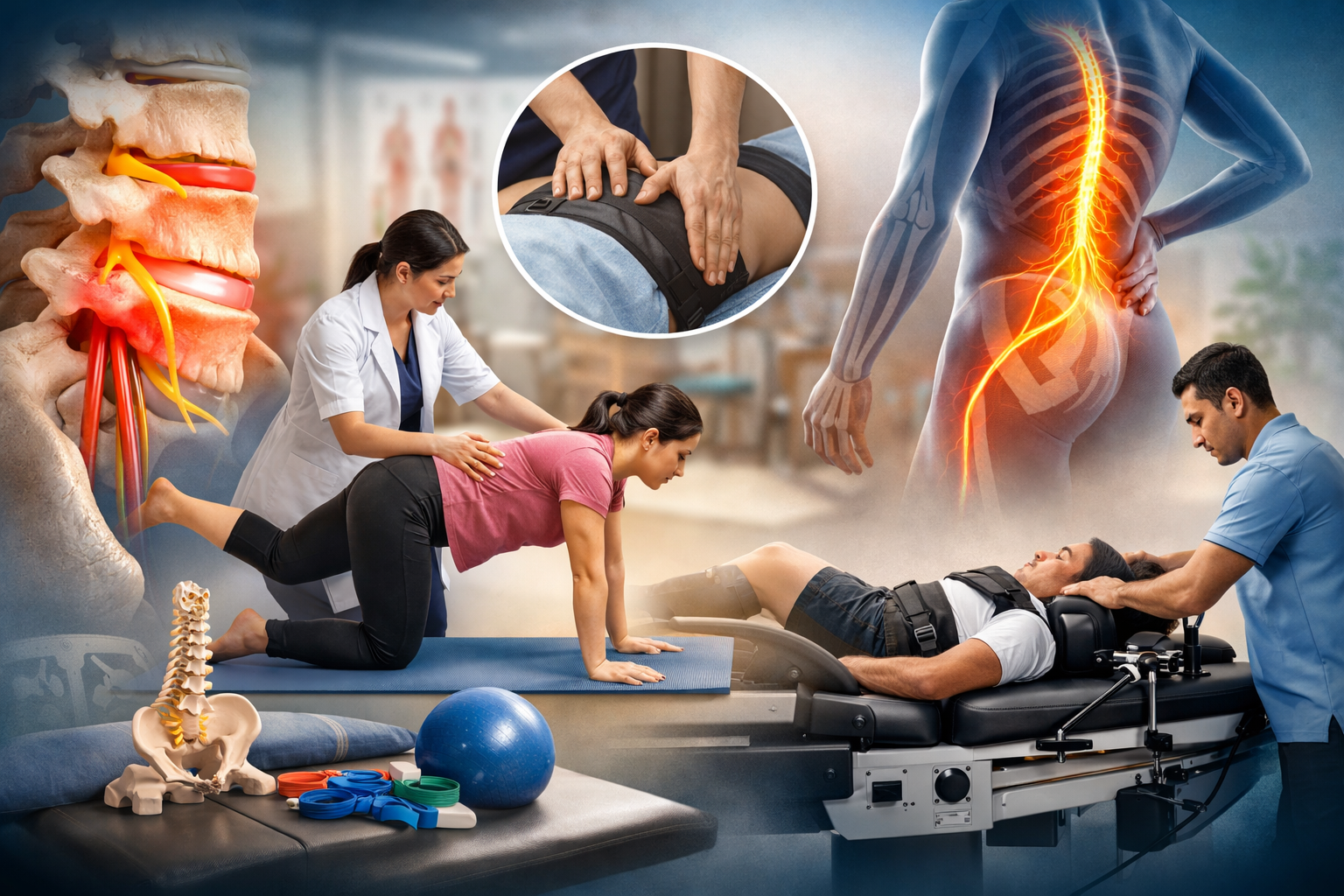
One of the most important treatment modalities at ASPC is SDM. This non-surgical technique creates gentle, calculated decompression forces within the spine, allowing compressed discs to relieve pressure and improve hydration. This supports the body’s natural healing mechanisms and significantly reduces leg pain.
Step-by-Step Physiotherapy Approach
Institutional vs. Specialized Physiotherapy
While Dhaka has respected institutions, ASPC provides a highly specialized environment specifically for complex spine and nerve cases.
- Large Institutions (CRP/NITOR): Treat a wide range of traumas and disabilities; individualized sciatica focus may be limited by volume.
- General Clinics: Often rely on machines (heat/ultrasound) rather than biomechanical assessment.
- ASPC Specialization: Focuses exclusively on musculoskeletal and spinal conditions.
- Manual Focus: Emphasis on hands-on manipulation and root-cause identification over standardized protocols.
Patient Satisfaction & Long-Term Success
With expert intervention, most patients achieve significant pain reduction and functional independence. Early intervention reduces the risk of chronic sciatica and helps prevent the recurrence of debilitating episodes.
Restore Your Spinal Health Today
Sciatica requires more than temporary relief. Through the specialized expertise of Dr. Mohammad Shahadat Hossain and Dr. Sapia Akter, you can access a structured, non-surgical path to recovery that addresses the true source of your pain.
Experience the difference of specialized physiotherapy at ASPC Manipulation Therapy Centre.