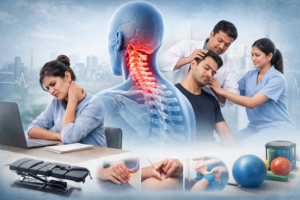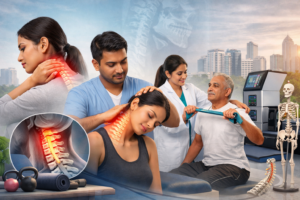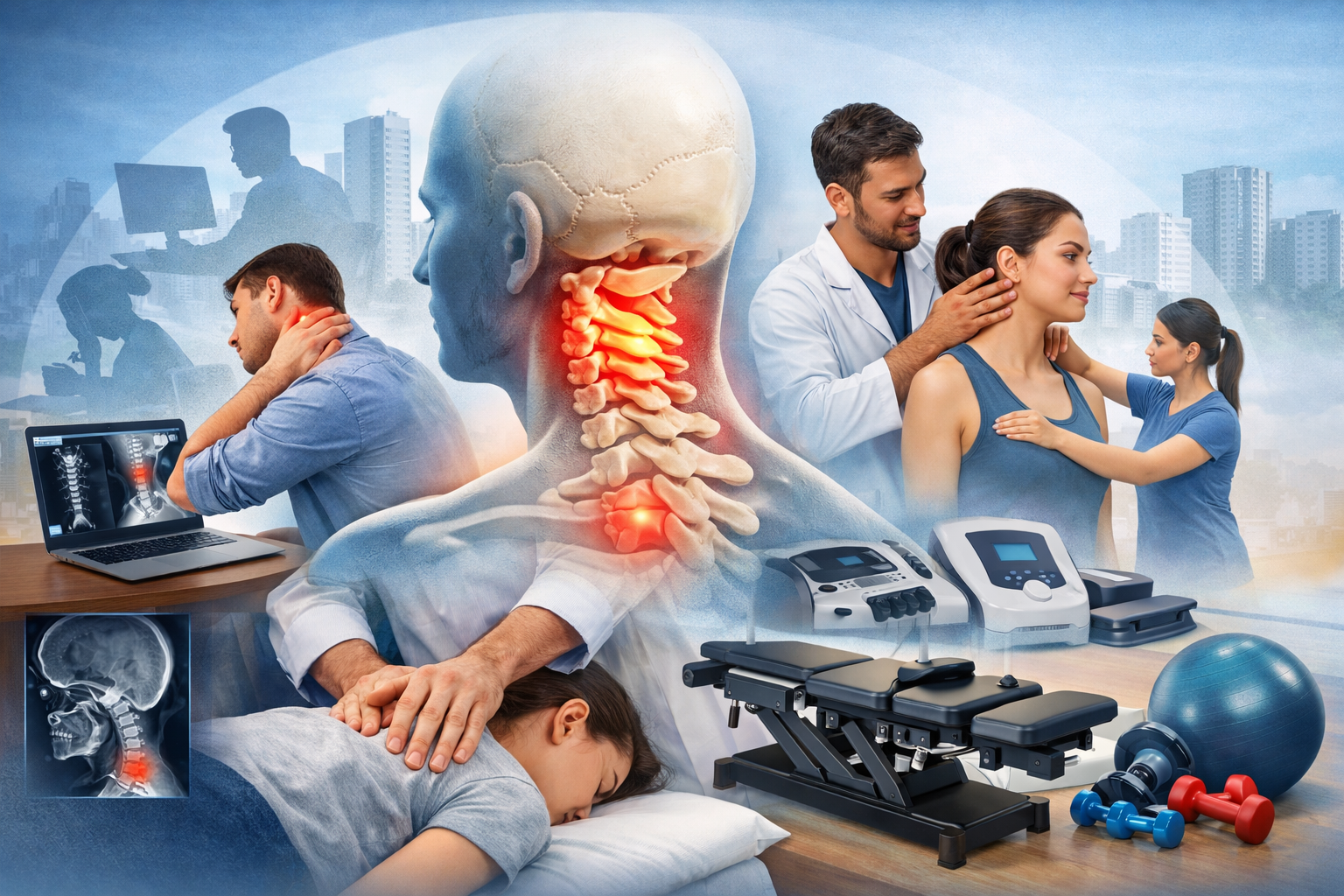
Neck pain has become one of the most common musculoskeletal problems affecting people in Dhaka. Rapid urbanization, long working hours, widespread computer use, and prolonged smartphone use have significantly increased the prevalence of cervical spine disorders among individuals of all age groups. Office workers, students, professionals, drivers, and homemakers frequently report persistent neck discomfort that interferes with their daily activities.
For many individuals, neck pain begins as mild stiffness or occasional discomfort. However, if the underlying causes are not properly addressed, the condition may gradually progress into chronic pain. Persistent neck pain can make everyday activities such as working, driving, reading, or sleeping difficult and uncomfortable.
In some cases, neck pain may radiate to the shoulders, upper back, or arms. Patients may also experience symptoms such as tingling, numbness, or weakness in the hands due to irritation of cervical nerve roots. These symptoms often indicate more complex cervical spine dysfunction that requires careful clinical evaluation.
Despite the high prevalence of neck pain in Dhaka, many individuals initially rely on temporary solutions such as pain medication, massage, or short-term physiotherapy modalities. While these approaches may provide temporary relief, they often fail to address the underlying mechanical and functional causes of cervical spine problems.
This growing health concern highlights the importance of consulting experienced physiotherapy specialists who possess a strong understanding of spinal biomechanics and evidence-based rehabilitation techniques.
Among the leading specialists in spinal rehabilitation, Dr. Mohammad Shahadat Hossain, PT and Dr. Sapia Akter, PT are widely recognized for their expertise in the non-surgical treatment of neck pain and cervical spine disorders. Through their clinical work at ASPC Manipulation Therapy Centre, they have successfully treated numerous patients suffering from neck pain and related musculoskeletal conditions, helping them restore spinal function and return to their normal daily activities through structured physiotherapy and rehabilitation programs.
Understanding Neck Pain from a Clinical Perspective
Neck pain is not a single disease but rather a symptom that can arise from various anatomical structures within the cervical spine and surrounding tissues. The cervical spine consists of seven vertebrae that support the head, protect the spinal cord, and allow a wide range of movements.
Because the neck supports the weight of the head while allowing flexibility in multiple directions, it is particularly vulnerable to mechanical stress and injury. Several anatomical structures may contribute to neck pain, including:
- Cervical intervertebral discs
- Facet joints
- Ligaments
- Muscles and tendons
- Cervical nerve roots
- Upper thoracic structures
- Shoulder girdle muscles
Neck pain may develop due to mechanical strain, prolonged poor posture, repetitive stress, muscle imbalance, degenerative disc changes, nerve irritation, or joint dysfunction.
An important observation in clinical practice is that the severity of pain does not always correspond to imaging findings. Some individuals with minimal abnormalities on MRI may experience severe pain, while others with visible degenerative changes may have relatively mild symptoms. This highlights the importance of functional clinical assessment rather than relying solely on imaging reports.
Why Choosing the Right Neck Pain Doctor Matters?
The quality of treatment a patient receives can significantly influence recovery outcomes. Many individuals with neck pain undergo treatments that focus only on temporary symptom relief rather than addressing the root causes of the problem.
Common Incomplete Treatments
- Excessive reliance on pain medication
- Passive modalities without active rehab
- Generic exercise programs
- Aggressive manipulation without assessment
- Lack of long-term planning
Qualities of a Reliable Specialist
- Detailed clinical assessment
- Evidence-based techniques
- Individualized programs
- Patient education focus
- Ethical & non-invasive approach
Clinical Leadership & Specialist Expertise
Dr. Mohammad Shahadat Hossain, PT
Dr. Mohammad Shahadat Hossain, PT is widely recognized for his expertise in spinal biomechanics and non-surgical spinal rehabilitation. His clinical approach focuses on understanding how the spine behaves during real-life movement rather than relying solely on imaging findings.
Focus Areas: Postural analysis, joint mobility, neurological screening, and logical clinical reasoning.
Dr. Sapia Akter, PT
Dr. Sapia Akter, PT plays a central role in guiding patients through the rehabilitation process. Her programs emphasize regaining strength, flexibility, and confidence in movements.
Focus Areas: Safe neck movement education, progressive strengthening, and long-term prevention strategies.
Comprehensive Treatment Approach for Neck Pain
The treatment approach followed by Dr. Mohammad Shahadat Hossain, PT and Dr. Sapia Akter, PT focuses on structured rehabilitation that addresses both the symptoms and the underlying mechanical causes of neck pain.
Detailed Clinical Assessment
The first step involves a thorough evaluation of history, posture, cervical mobility, muscle strength, and functional movement analysis.
SDM (Spinal Decompression Method)
Used to reduce excessive pressure on cervical discs and nerves, supporting natural healing and relieving compression.
Manual Therapy
Includes joint mobilization, soft tissue release, and gentle manipulation to improve spinal mechanics and relieve stiffness.
Deep Neck Stabilization
Focuses on strengthening the deep stabilizing muscles (flexors and scapular stabilizers) to protect the cervical spine.
Postural & Ergonomic Correction
Guidance on workstation setups, smartphone usage, and sleeping positions to reduce daily mechanical stress.
Home Exercise Programs
Individualized plans to ensure patients continue their rehabilitation and maintain long-term spinal health beyond the clinic.
Patient Experience & Outcomes
Patients receiving treatment report a positive and supportive rehabilitation experience, highlighting clear communication and patient-centered care.
- Gradual and lasting pain relief
- Improved neck mobility and flexibility
- Reduced dependence on pain medication
- Better posture and increased confidence in movement
- Greater ability to perform daily activities comfortably
Long-Term Outcomes of Expert Treatment
Evidence-based physiotherapy rehabilitation can provide significant long-term benefits. When treatment focuses on correcting the underlying mechanical causes rather than only relieving symptoms, patients often experience lasting improvements in physical function and well-being.
Expert care helps restore normal spinal mechanics, strengthens supporting muscles, and improves stability. This results in sustained pain reduction, improved alignment, better posture control, and a significant reduction in recurrence—ultimately contributing to a better quality of life.
Specialized Care vs. General Hospital Systems
Dhaka features many esteemed institutions such as CRP, NITOR, Square Hospital, Labaid, Ibn Sina, Popular Diagnostic Centre, and Bangladesh Spine & Orthopaedic Hospital. While these multidisciplinary systems provide vital orthopedic services, the approach at ASPC stands out due to its exclusive focus on non-surgical rehabilitation.
Unlike departments that may rely on passive modalities (heat/ultrasound), Dr. Mohammad Shahadat Hossain and Dr. Sapia Akter emphasize active rehabilitation—manual therapy, stabilization training, and functional movement re-education.
Restore Your Spinal Health Today
Neck pain is complex, but it doesn’t have to be permanent. For individuals seeking safe, effective, and non-invasive treatment for neck pain in Dhaka, the clinical expertise of Dr. Mohammad Shahadat Hossain, PT and Dr. Sapia Akter, PT continues to play an important role in improving spinal health and quality of life.
Expert Care. Evidence-Based Practice. Lasting Results.