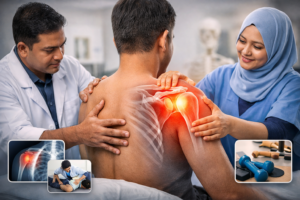
In Bangladesh, frozen shoulder is often misunderstood and sometimes managed improperly. Many patients rely on painkillers for extended periods, receive repeated steroid injections, or are advised to wait until the condition resolves naturally. In certain situations, surgery may even be recommended before adequate conservative treatment has been attempted. These approaches frequently delay proper recovery and increase the likelihood of prolonged stiffness and functional limitation.
However, modern clinical evidence clearly shows that specialized physiotherapy is the most effective and safest first-line treatment for frozen shoulder, particularly when delivered by experienced clinicians who understand shoulder biomechanics and the different stages of the condition. With accurate assessment, targeted manual therapy, and structured rehabilitation exercises, most patients can regain shoulder mobility and reduce pain without surgical intervention.
For individuals seeking expert frozen shoulder care in Bangladesh, ASPC Manipulation Therapy Centre has emerged as a nationally trusted center for non-surgical treatment. Under the clinical leadership of Dr. Mohammad Shahadat Hossain and the rehabilitation guidance of Dr. Sapia Akter, ASPC provides comprehensive frozen shoulder management focused on restoring natural shoulder movement and improving long-term function.
What Is Frozen Shoulder?
Frozen shoulder is a condition in which the capsule surrounding the shoulder joint becomes inflamed, thickened, and progressively tight. This process leads to the formation of adhesions within the joint capsule, significantly restricting shoulder movement in all directions. Unlike common shoulder pain caused by muscle strain or overuse, frozen shoulder directly affects the joint structure and progresses slowly over time.
The condition is self-limiting but can last from one to three years if not managed appropriately. Without structured physiotherapy, many patients are left with residual stiffness, weakness, and functional limitations even after pain subsides.
Stages of Frozen Shoulder
Freezing Stage
This early phase is dominated by pain. Patients experience increasing shoulder pain, particularly at night and during movement. Sleep disturbance is common, and stiffness begins to develop gradually.
Frozen Stage
Pain intensity may reduce slightly, but stiffness becomes the primary problem. Shoulder movement is severely restricted, making daily activities extremely challenging.
Thawing Stage
Gradual improvement in shoulder mobility occurs. However, without guided rehabilitation, recovery during this phase can be slow and incomplete.
Who Is Most at Risk in Bangladesh?
Frozen shoulder most commonly affects individuals between 40 and 65 years of age. In the Bangladeshi population, several factors increase the risk:
Symptoms and Impact on Daily Life
- Persistent shoulder pain, often worse at night
- Progressive stiffness and loss of movement
- Difficulty lifting the arm or reaching behind the back
- Pain during dressing and grooming
- Shoulder weakness and fatigue
ASPC: A Nationally Recognized Center
ASPC Manipulation Therapy Centre follows international physiotherapy standards while tailoring treatment to individual patient needs. Our core treatment philosophy includes:
Precise Diagnosis
We ensure accurate differentiation of frozen shoulder from rotator cuff tears, arthritis, or nerve-related pain before starting treatment.
Stage-Specific Care
We apply different mobilization and protection strategies depending on the biological stage of the condition.
Ethical Practice
We focus on functional independence and the ethical avoidance of unnecessary surgical interventions.
Expertise of Dr. Mohammad Shahadat Hossain
Dr. Mohammad Shahadat Hossain, PT, is widely regarded as one of the most experienced and trusted clinicians for frozen shoulder management in Bangladesh. His clinical precision and focus on restoring joint mechanics rather than masking pain make him a preferred choice nationwide.
Rehabilitation Leadership: Dr. Sapia Akter
Dr. Sapia Akter, PT, plays a vital role in guiding patients through the rehabilitation and recovery phase. She specializes in gradual and pain-free exercise progression, with special attention to elderly and female patients, ensuring long-term shoulder health.
The ASPC Treatment Approach
Each patient undergoes a detailed assessment, including postural and scapular movement analysis and muscle strength testing. Our treatment includes:
- Pain Management: Gentle manual therapy and soft tissue techniques to reduce inflammation.
- SDM (Spinal Decompression Method): Optimizing biomechanics to support mobility recovery.
- Joint Mobilization: Carefully graded techniques to stretch the joint capsule safely.
- Progressive Range of Motion: Assisted movements progressing to active exercises.
- Stability Training: Strengthening rotator cuff and scapular stabilizers.
- Customized Home Program: Ensuring continuity of care and faster recovery.
Comparison: ASPC vs. General Hospital Protocols
Across Bangladesh, major hospitals like Square, Labaid, or Asgar Ali Hospital provide valuable orthopedic services. However, frozen shoulder treatment in these settings often follows generalized protocols—focusing on medication, injections, or routine electrotherapy (Ultrasound/TENS). While these reduce pain temporarily, they may not address the underlying joint capsule stiffness.
The ASPC Difference: Our treatment model prioritizes hands-on joint mobilization and stage-specific manipulation therapy. We focus on the root cause and long-term functional recovery through personalized, high-attention care that large hospital settings often cannot provide due to high patient volumes.
Long-Term Outcomes
With timely and expert physiotherapy, patients achieve significant pain reduction, improved shoulder mobility, better sleep, and a return to their normal quality of life. At ASPC, surgery is viewed as the absolute last option.
Restore Your Shoulder Health
Early consultation with experienced clinicians like Dr. Mohammad Shahadat Hossain and Dr. Sapia Akter can significantly improve recovery outcomes. Their dedication to ethical care and clinical precision continues to make ASPC Manipulation Therapy Centre the trusted choice for frozen shoulder treatment nationwide.